Tighten Up: Rigging Tension Made Simple
Why proper rigging tension matters
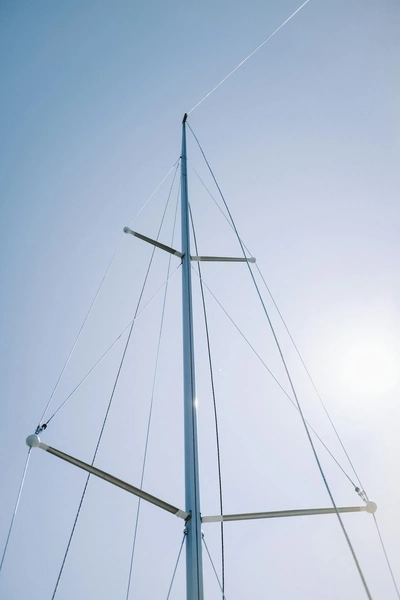
A correctly tensioned standing riggingAll the spars (masts, booms, yards), cables and ropes needed to hold and maneuver the sails. More keeps the mast on-axis. It gives the sails their intended shape, and eliminates unwanted flex that slows the boat. For the everyday owner, the payoff is safer handling and fewer surprise adjustments when the wind picks up. For the performance-oriented sailor, balanced riggingAll the spars (masts, booms, yards), cables and ropes needed to hold and maneuver the sails. More translates into better pointing ability, reduced leeway and a measurable gain in speed: often 5% or more in moderate breezes. This guide gets you from “my rig feels sloppy” to “the boat tracks straight and feels solid” using only basic tools and a systematic approach.
Rigging pre‑tune checklist & tools
- Rig tension gauge – provides objective numbers for each shroud or stay.
- Turnbuckle wrench – allows precise half turn adjustments without stripping.
- Plumb bob or laser level – checks mast verticality after tension changes.
- Safety gloves and eye protection – prevents cuts from metal hardware.
Before getting started, perform a quick safety check: ensure no crew are under the mast, verify the mast is securely stepped, and confirm all running riggingAll the spars (masts, booms, yards), cables and ropes needed to hold and maneuver the sails. More is slack enough to avoid unwanted loads during adjustment. Finally, check the gauge calibration before the first measurement. A mis-calibrated gauge can give a false reading. Verify it against a known weight or the manufacturer’s zero setting.
Measuring existing rig tension
Attach the tension gauge to a shroud or stay and pull gently until the gauge reads a stable value. If it’s a model where you need to pull, avoid jerking: a slow, steady pull mimics the load the rig experiences under sail. Record the reading for each line (port shroud, starboardRight side of a boat when looking forward More shroud, forestay and backstay) and note the wind condition at the time. Even if you only have a calibrated spring scale, you can obtain a rough estimate. Just remember the numbers will be less precise. Having these baseline numbers lets you see how far each line deviates from the desired target range we will define in the next step.

Defining a usable target‑tension range
The exact ideal riggingAll the spars (masts, booms, yards), cables and ropes needed to hold and maneuver the sails. More tension varies with boat size, mast material and sailing style. In case you do not already have a target-tension range, here are starting points for a typical 30-ft cruiser and which would work for a typical production fiberglass hull with a standard aluminum mast:
- Forestay: 300 kg ± 15 %
- Backstay: 250 kg ± 15 %
- Shrouds: 280 kg ± 15 %
If you have the documentation for your mast, you could also perform this quick calculation:
- Find the mast-section modulus. It’s usually printed on the mast or in the owner’s manual (e.g., “Mast rating 350 kg”).
- Take 80 % of that rating. This gives a safe baseline tension for the forestay.
- Apply ±15 %. The upper bound protects against overtightening, the lower bound ensures sufficient stiffness.
Example: If the mast rating is 400 kg, 80 % equals 320 kg. The target range becomes 272 kg - 368 kg. Use the same percentage for the shrouds and backstay, adjusting slightly lower for the backstay if you prefer a bit more mast bend in heavy air.

Adjusting the turnbuckles
- Step 1 – Loosen the opposite side
To keep the mast centered, always adjust the opposite turnbuckle in tandem. If you’re tightening the port shroud, slightly loosen the starboardRight side of a boat when looking forward More shroud (no more than a quarter turn). - Step 2 – Make incremental turns
Turn the target turnbuckle clockwise to increase tension, counter-clockwise to decrease. As a rule-of-thumb, one full turn changes tension roughly 5 % to 7 % of its previous value. Applying half turns gives you finer control, preventing overshoot when you are close to the desired tension. Tip: use a marker on the turnbuckle to see the half turn position. - Step 3 – Re-measure
After each half turn, pause, re-attach the tension gauge, and note the new reading before deciding whether another half turn is required. Compare it to your target range. Continue the half turn cycle until the reading falls within five percent of the desired number. - Step 4 – Mirror the opposite side
Once the port sideLeft side of a boat when looking forward More is set, repeat the same process on the starboardRight side of a boat when looking forward More side, aiming for a matching tension value. Symmetry is crucial. Unequal tension pulls the mast off-center and creates uneven sail trim.
Repeat the sequence for the forestay and backstay, remembering that the forestay typically runs slightly tighter than the backstay on upwind rigs.
Verifying alignment & load balance
Hang a plumb bob from the masthead or fire a laser level down the mast’s centerline. The line should intersect the base of the mast within a few centimeters. Visually inspect the shrouds. They should form equal angles on both port and starboardRight side of a boat when looking forward More sides.
A quick “shake test” helps spot hidden slack: grip the mast near the deck and give it a firm tap. A properly tensioned rig will transmit a crisp, uniform vibration. If you notice any wobble or asymmetry, revisit the corresponding turnbuckle and fine-tune by a half turn.
Finally, run a short test sail (five to ten nautical miles) in moderate wind. Observe the boat’s heel, pointing angle and whether the mainsail maintains a clean shape without excessive twist. Minor tweaks after the sail are normal. Just note the final riggingAll the spars (masts, booms, yards), cables and ropes needed to hold and maneuver the sails. More tension values for future reference.
Final walk‑through & maintenance log
After the test sail, confirm the boat tracks straight, the helm feels balanced and there is no unexpected mast movement. Create a simple log entry that includes the date, wind range, ambient temperature, tension readings for each line and any notes on adjustments made. Store this in a note or, better still, within Ready4Sea for easy retrieval.
For most cruising boats, retighten every few months, after any heavy-weather passage or whenever you notice a change in sail shape. Racers may want to check before every regattaRace involving boats, most often sailboats. More. Unless you need to adjust the tension for racing (see above), you may want to lock the turnbuckles with split pins. Doing so will ensure the shrouds and stays don’t loosen up unintentionally. Just make sure you protect the pin ends. You wouldn’t want a tear in your sail.
By keeping a consistent log and a regular check-in cadence you minimize surprise failures and keep the rig performing at its best with minimal effort.

Disclaimer: The instructions in this article are provided for informational purposes only. If you are unsure about any step, have limited experience with riggingAll the spars (masts, booms, yards), cables and ropes needed to hold and maneuver the sails. More, or encounter unusual conditions, you should consult a qualified marine technician or rigger. Ready4Sea supplies the guidance but is not responsible for any damage, injury, or loss resulting from the use of this information.