Every boat owner fears storms and saltwater. Yet the most relentless destroyer sits quietly overhead all summer. UV radiation and heat do not announce themselves with howling wind or crashing waves. They slowly age surfaces, dry out materials, and shorten the life of equipment that sits in the sun. By the time you notice the damage, the repair bill is already written.
This guide explains what the sun actually does to your boat, what it costs you if you ignore it, and exactly what you need to do about it. Whether you sail a classic wooden sloop, cruise on an aluminum trawler, go for day trips on a RIB or race a modern GRP racer, the principles of protection remain the same. The materials may differ, but the enemy is universal, especially when a heat wave strikes.
The summer sun can be brutal, even under temperate latitudes. Obviously it is even more damaging, all year long, under the tropics.
The Hull: Material-Specific Vulnerabilities
The protection strategy depends entirely on what your boat is made of. Ignoring the specific needs of the deck and hull material is the fastest way to shorten your boat’s lifespan.
GRP (Fiberglass): UV breaks down the resin binder in the gel coat. This causes “chalking”, a powdery residue that leaves the surface dull and porous. Once the gel coat degrades, water penetrates the laminate below, accelerating osmosis (blistering). Heat compounds the problem by expanding and contracting the resin, creating micro-cracks that UV then widens. The fix is straightforward: regular waxing with a UV-blocking compound every three to four months during the season.
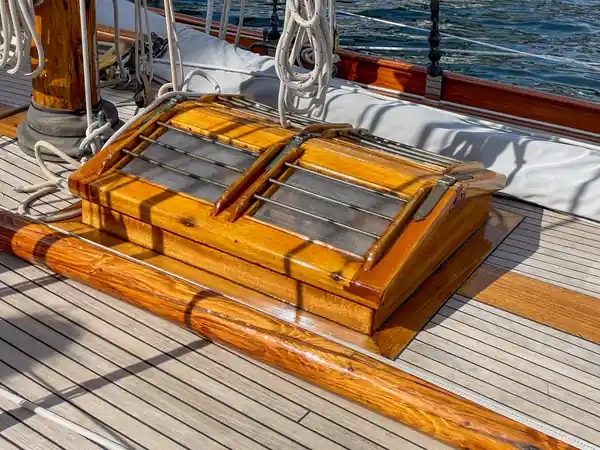
Wood: For wooden boats, and specifically teak decks, the sun’s rays strike in multiple ways, much like the many blades of a razor. UV destroys the varnish (or bleaches the teak), exposing the grain to moisture. Heat dries out the wood, causing it to shrink and check (surface cracks), which leads to leaks. The solution is frequent maintenance: high-quality, UV-inhibiting spar varnish applied twice a season, and keeping the boat shaded to prevent the wood from baking.
Restoring your teak deck and/or varnished spars and fittings is major refit, compared to the regular sanding and varnish routine.
Metal (Aluminum & Steel): Here, the rules change. UV radiation does not directly degrade bare aluminum or steel the way it does polymers, varnish, or paint. But it can still contribute indirectly, by degrading protective coatings and surface finishes. The sun’s primary threat to metal is indirect: it degrades the paint or coating that protects the metal from corrosion. If the paint fails, heat then accelerates the corrosion process.
The Deck Factor: While the hull might be fine bare, the deck is a different story. An unpainted aluminum deck in direct sun can become scorching hot, making it unusable and potentially damaging footwear or bare feet. This is why decks are generally painted in white or a light, UV-stable color to reflect heat and keep the surface cool.
Action: If your metal hull is painted, treat it like GRP: inspect for chips and touch up immediately. If it is bare, focus your protection efforts on the deck and any painted superstructures.
RIBs (Hypalon/PVC): The tubes of a Rigid Inflatable Boat are pure rubber or plastic. They are highly susceptible to UV, which causes brittleness and cracking. Heat can also soften the adhesives holding the floor boards to the tubes. The solution is specific UV protectants designed for inflatables and avoiding long-term storage in direct sun while inflated. The same goes for your dinghy or tender, so protecting it with a sacrificial cover makes sense.
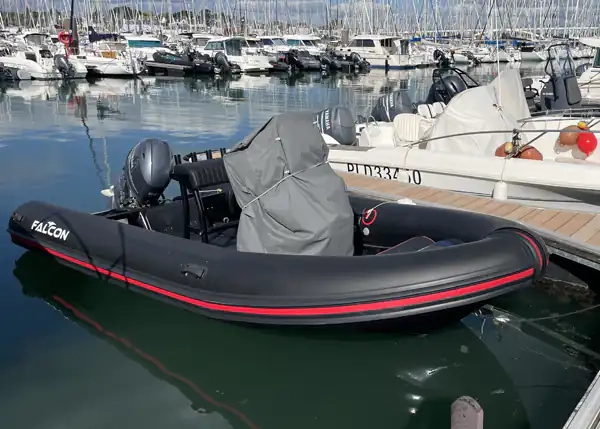
This black RIB will likely experience significant tube and adhesive strain when parked in the sun for weeks at a time.
Soft Goods: Upholstery, Canvas, and Sails
Soft goods are the most exposed components on any vessel. Vinyl, canvas, and synthetic cordage all suffer from UV degradation. And on sailboats, there is a critical addition: the sails themselves.
Vinyl and Canvas: UV dries out the plasticizers in vinyl, making seats and cushions brittle and prone to cracking. Canvas loses its water repellency and tears under load. The solution combines protection and storage. Apply a UV protectant spray designed for marine vinyl every few weeks. Use breathable covers when the boat is not in use. Store cushions indoors during extended periods of non-use.
Sails: For sailboat owners, the stakes are higher. Sails are engineered from high-tech fibers (Dacron, Nylon, Carbon, Kevlar) that are incredibly sensitive to UV. For detailed care advice, refer to our guide on extending the lifespan of your sails. Here is a summary:
The Golden Rule:Sails should never be left in the sun when not underway. Even a few hours of direct exposure while docked can significantly reduce their lifespan.
Lazy Bags and Covers: Ensure your lazy bag or sail cover fits snugly and is UV-stable. A loose cover allows the sail to flap and bake in the sun, causing rapid degradation.
UV Strips: On genoas, the UV strip on the leech is a sacrificial layer designed to take the hit. Inspect it regularly. Once it is worn through, the structural fibers underneath are exposed to the sun and will fail.
Action: When you dock, cover the sails immediately. If you are racing and need to reef, ensure the covered portion is secure.
Lazy-bags are a functional 2-in-1 solution to sail storage and protection.
Synthetic Ropes: UV weakens fibers, reducing breaking strength. A line that looks fine on the outside may already have lost a significant part of its original strength. Replace dock lines and sheets every 2-3 years in high-sun climates, regardless of appearance.
Canvas covers: All this being said, canvas is also part of the solution, in order to protect other items. Consider canvas protections as consumables much easier to replace than other equipments they are protecting. A bimini, awning, cockpit cover, sail cover, sun cover for electronics, or breathable storage cover can greatly reduce direct UV exposure and lower surface temperatures on deck and inside the boat.
Rubber, Seals, and Hoses: The Silent Failures
Rubber components are often the first to fail under the combined assault of heat and UV, yet they are the most overlooked. Unlike gel coat or paint, which show visible signs of distress like chalking or fading, rubber degradation is often internal until it is too late. The heat accelerates the oxidation process, causing the rubber to lose its elasticity and become hard and brittle.
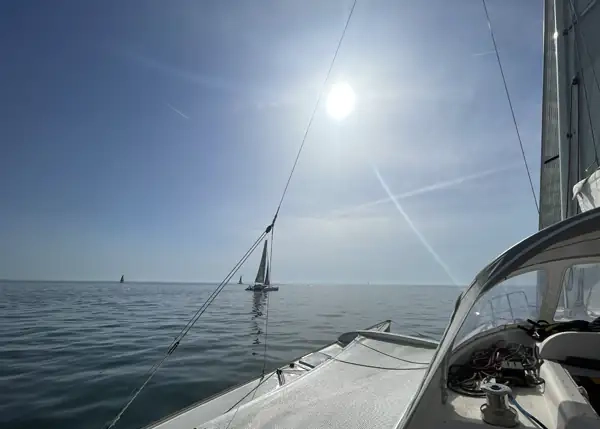
It’s going to be another scorching hot, windless day. And unless you have take adequate measures, your boat is going to take another beating.
The Critical Zones:
Hoses: Raw water intake hoses, coolant lines, and fuel lines are constantly exposed to heat cycles. A hose that feels supple in the cool morning air can become rock-hard by midday. A burst raw water hose can lead to immediate engine overheating, while a cracked fuel line poses a fire risk.
Seals: Windshield gaskets, deck fitting O-rings, and hatch seals are designed to keep water out. When they dry out, they shrink and crack, allowing water to penetrate the core of the hull or the interior of the boat. This is a common cause of unexplained leaks that appear only after a hot summer.
Belts: Fan belts and alternator belts rely on friction and flexibility. Heat makes them glaze and crack, leading to slippage and eventual failure, leaving you stranded without power or cooling.
The Inspection Protocol: Do not just look. Feel. Squeeze every accessible hose. If it feels hard, crunchy, or shows surface cracks (checking), replace it immediately. Do not wait for it to burst. For seals, using a silicone-based lubricant is generally the best way to keep them pliable. Avoid petroleum-based products like Vaseline, unless the manufacturer explicitly allows them. Otherwise it may accelerate the degradation of rubber. Replace any seal that has lost its resilience.
Plastics and Deck Hardware: The Brittle Trap
Deck hardware is often assumed to be indestructible, but many critical components are made from engineering plastics like nylon, Delrin (acetal), or ABS. While these materials are strong and corrosion-resistant, they are highly vulnerable to UV radiation. Over time, UV photons break the polymer chains, causing the material to lose its tensile strength and become brittle.
The Hidden Danger: A cleat, winch handle, or pulley block that looks perfectly fine on the surface may have suffered significant internal damage. When you load a cleat with a mooring line in a strong breeze, or when you apply torque to a winch, the weakened plastic can snap catastrophically. This is a safety hazard that can lead to lost gear, injury, or even the loss of the boat if a mooring fails.
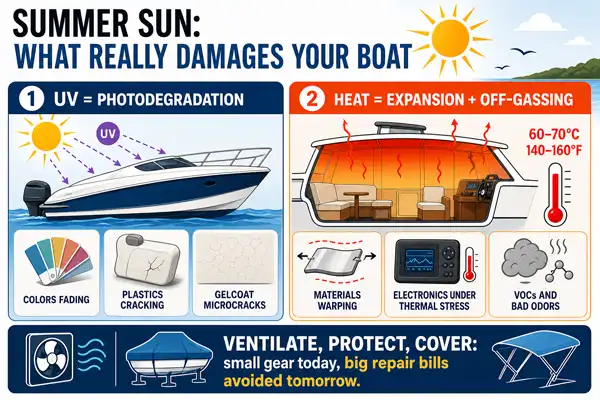
Instrument Housings and Fuel Tanks: Plastic instrument housings can crack, allowing water to short-circuit expensive electronics. Similarly, plastic fuel tanks can warp or develop hairline cracks under the stress of heat expansion and UV degradation, leading to dangerous fuel leaks. See the inset below for a deeper look at the “Greenhouse Effect” and how it damages cabin electronics and air quality.
The Action Plan: Conduct a “tap test” on plastic hardware. Tap a nylon cleat with a screwdriver handle. A healthy piece will sound solid, while a UV-damaged piece will sound dull or hollow. Look for discoloration (yellowing or whitening) and surface chalkiness. If you see any signs of embrittlement, replace the part immediately. Do not risk a failure at sea.
Solar Panels: Modern solar panels are durable, but the backing material and seals are not immune to UV. Prolonged exposure can age the backing materials and edge seals, which may eventually lead to delamination, water ingress or electrical faults.
Action Plan: Clean panels regularly to remove salt and dust (which trap heat). Check the edges of the panels for lifting seals. If your panels are mounted on a curved surface, ensure the mounting brackets allow for thermal expansion to prevent cracking the glass.
The Engine Bay: Heat on Top of Heat
The engine bay is the hottest place on the boat, and adding intense solar radiation to the mix creates a perfect storm for mechanical failure. Engines are designed to operate within specific temperature ranges, but high ambient temperatures reduce the efficiency of the cooling system and accelerate the degradation of fluids.
Cooling System Stress: Raw water cooling systems rely on the flow of seawater to dissipate heat. In hot weather, the water itself is warmer, reducing its cooling capacity. If the raw water strainer is clogged with algae (which thrives in warm water) or the impeller is worn, the engine can overheat rapidly. A thermostat that is sluggish in cold weather may fail to open fully in the heat, causing the engine to run hot and suffer from pre-ignition or warped cylinder heads.
Fuel and Oil Degradation: Heat accelerates the oxidation of engine oil, reducing its lubricating properties and shortening its service life. In carbureted engines, the risk of vapor lock increases significantly. This occurs when fuel boils in the lines before reaching the carburetor, creating vapor bubbles that block fuel flow and stall the engine. Modern fuel injection systems are less susceptible, but heat can still degrade fuel quality and clog injectors.
Preventative Measures: Before the heat wave hits, clean the raw water strainer thoroughly. Inspect the impeller for wear and replace it if necessary. Check the thermostat operation. Ensure the engine bay is well-ventilated. If possible, run a battery-powered fan to circulate air when the engine is off.
The Bottom Line: What Prevention Costs vs. What Neglect Costs
The financial argument for UV and heat protection is undeniable. A season of proper protection (i.e. waxing, applying protectants, inspecting hoses, and covering sails) might cost a few hundred euros, dollars or pounds in materials and a handful of hours of your time.
Contrast this with the cost of neglect. Restoring a faded, chalky gel coat hull can cost thousands of euros in labor and materials. Replacing a full set of cracked vinyl upholstery is a significant expense. A single burst hose that floods the bilge or destroys an engine can run into the tens of thousands. For wooden boats, the cost of re-caulking and re-varnishing is a massive labor undertaking. For metal boats, sandblasting and repainting a corroded hull is a shipyard-level job.
The math is simple. Prevention is not an expense. It is a high-return investment in your boat’s lifespan, safety, and resale value. The sun will not stop shining, but you can stop it from winning.
Prevention turns out to be less costly in the long run.
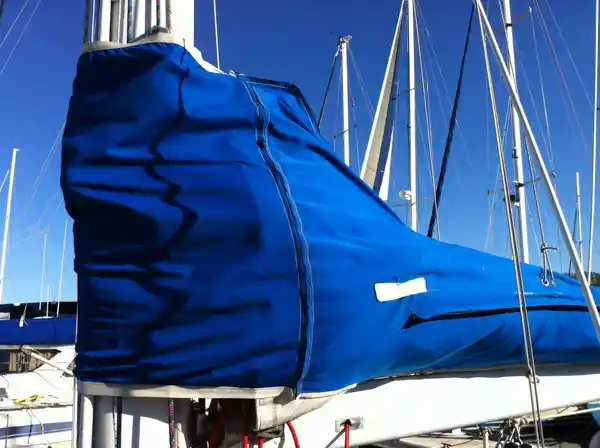
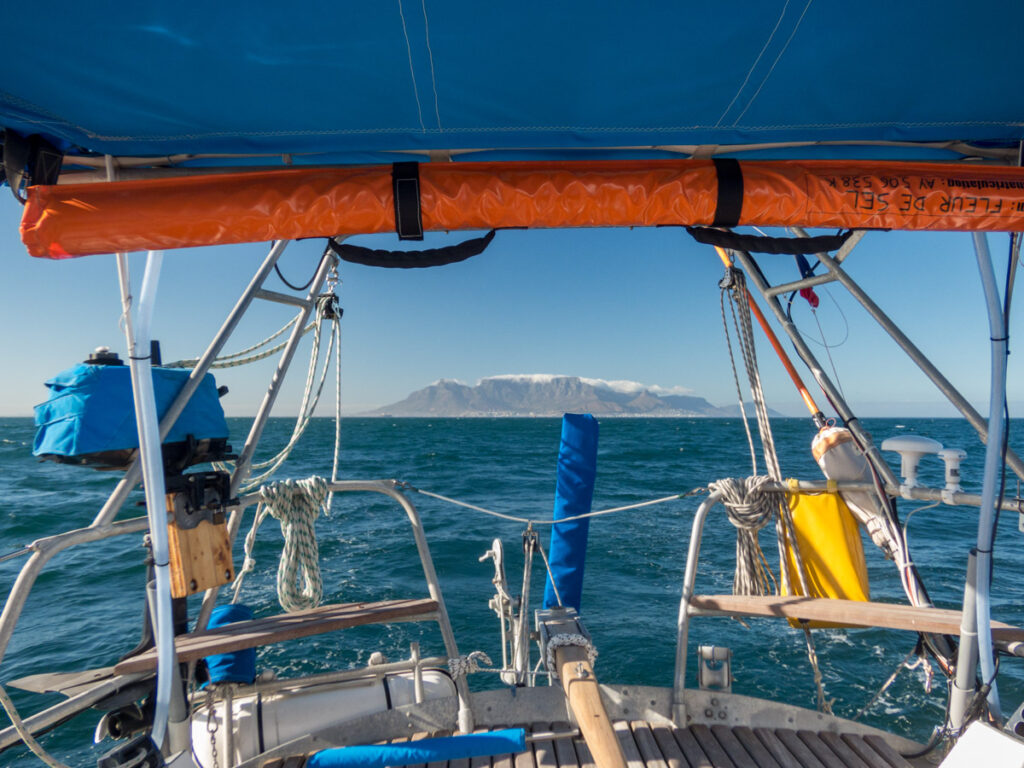
A bimini (overhead) is a good starting point. But breathable covers (in blue) can be made for pretty much everything!
The Summer Protection Checklist
Now that you understand the specific risks to your boat’s materials, the next step is to turn that knowledge into action. A comprehensive maintenance routine is the only way to ensure your boat survives the summer in top condition. This checklist consolidates the critical tasks for every boat type, organized by frequency, so you can systematically protect your vessel against the sun and heat.
Before the Season Starts:
Clean the raw water strainer and inspect the impeller.
Inspect all rubber hoses, seals, and belts. Replace anything that feels hard or brittle.
GRP: Apply a fresh coat of UV-blocking wax to the hull.
Wood: Inspect varnish and caulking. Sand and touch up any worn areas.
Metal: Inspect paint for chips. Touch up immediately.
RIB: Inspect tubes for cracks. Apply a dedicated UV protectant.
Sailboat: Inspect lazy bag, UV strips, and sail covers for wear.
Monthly During the Season:
Apply UV protectant spray to vinyl upholstery and canvas.
Inspect gel coat, varnish, or paint for new signs of chalking, crazing, or peeling.
Check the cooling system operation on hot days. Ensure no overheating warnings.
Check for loose deck fittings caused by thermal expansion.
Sailboat: Inspect UV strips.
After Each Use:
Wash down the boat with fresh water to remove salt, which can accelerate surface degradation and make UV damage worse over time.
Ventilate the cabin to reduce heat buildup and prevent mold.
Cover exposed upholstery and canvas.
Sailboat: Ensure sails are covered immediately when docked.
Ready4Sea is designed to help you manage this exact routine. You can use the app to:
Track Equipment Age: Log the installation (and expiry) date of any hose, seal, cushion, and sail to know exactly when they need replacing.
Customize Your Checklists: Add the specific tasks from this guide to your personalized seasonal maintenance plans.
Set Smart Reminders: Get notified when it’s time to wax, inspect, or replace critical components based on your usage and the season.
Start protecting your investment today. Download Ready4Sea and build your custom summer protection plan.
Conclusion
The sun is an inevitable force, but the damage it causes can be avoided. Whether you own a classic wooden sloop, a modern aluminum trawler, a GRP cruiser, or a RIB, the principles of protection are universal: block the UV, manage the heat, and inspect regularly. By adopting a disciplined routine of maintenance, you can extend the life of your boat, ensure the safety of your crew, and preserve the value of your investment.
Don’t let the summer sun dictate the condition of your boat. Take control of your maintenance schedule today.
We need your approval
To provide the best possible experience, our site uses cookies and other technologies to store and/or transmit user data.
Consenting to the use of these technologies will enable us to process the data for fluid use. Refusing to use them may prevent you from using some features.
Essential
Always active
Storage and transmission strictly necessary to provide the service explicitly requested by the user, or for the sole purpose of routing data via an electronic communication network.
Preferences
The technical storage or access is necessary for the legitimate purpose of storing preferences that are not requested by the subscriber or user.
Statistics
The technical storage or access that is used exclusively for statistical purposes.Storage and transmission used exclusively for anonymized statistical purposes. Without a legal mandate, without the voluntary cooperation of your Internet Service Provider (ISP), or without additional data supplied by a third party, the data stored or transmitted for this purpose alone cannot be used to identify you. *** A small company like ours needs this data to operate at a reasonable cost to the user, thank you! ***
Marketing
Storage and transmissions used to map your browsing for the purpose of sending you advertising.